
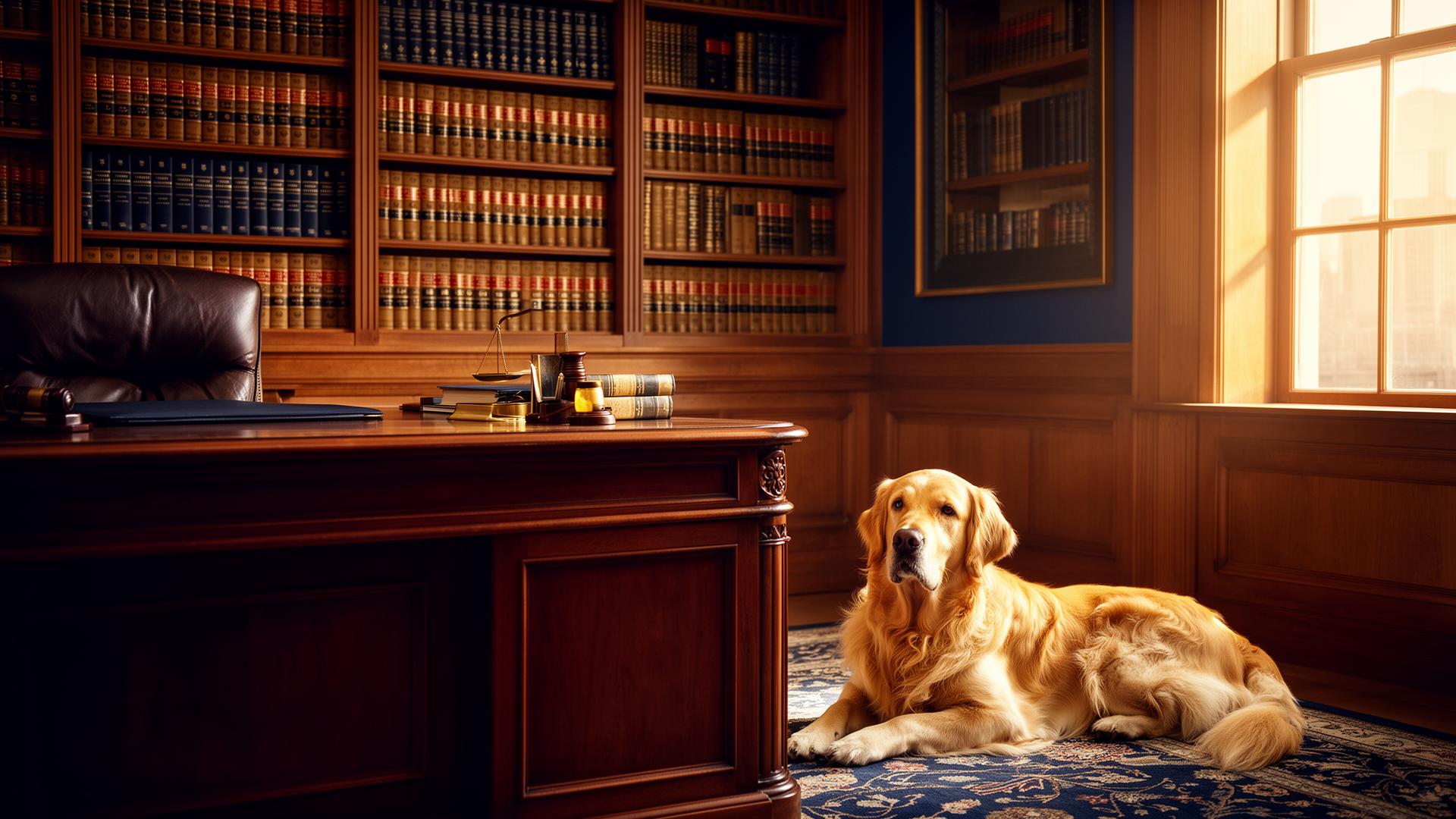
Estate Planning for Pet Owners
Practice Area · 04
Your legacy includes your animals.
A complete estate plan does not stop at human heirs. The animals in your life deserve the same seriousness — drafted by an attorney fluent in both estate and animal law, integrated from the very first draft.
30+
Years In Estate Work
1000s
Plans Drafted
50
States Coordinated
0
Pets Surrendered

Two Fields, One Plan
The intersection of estate and animal law.
Most estate planning attorneys are excellent with houses, retirement accounts, and human beneficiaries. Few are equally fluent in the legal mechanisms that protect a living animal after the owner is gone. The gap between those two competencies is where families lose pets they assumed were taken care of.
Richard built his estate planning practice precisely on that intersection. Every plan integrates the pet from the first draft, not as an afterthought but as an heir whose welfare is treated with the same seriousness as any other.
The Toolbox
What a complete plan includes.
Pet trusts
Legally binding instruments that name a caretaker, fund their work, and create real accountability.
Will provisions
Carefully drafted clauses that work with — not against — the trust structure.
Durable powers of attorney
Authorization for emergency veterinary and care decisions when you cannot make them yourself.
Funding mechanisms
Life insurance and asset earmarks designed to fund care exactly when it is needed most.
Good estate planning is the rare legal work whose value is measured in events that never happen — the surrender that did not occur, the family fight that never erupted, the pet that simply continued their life.
Richard Bruce Rosenthal, Esq.
Common Pitfalls
What to avoid.
Verbal agreements
Family members agree warmly, then circumstances change. Without a binding instrument, the promise dissolves.
Underfunded provisions
Naming a caretaker without funding their ability to provide care guarantees the plan will fail under stress.
A single sentence in a will
A working plan is required, not a clause. Wills move through probate too slowly to protect a living animal.
No backup caretaker
Plans that name only one person collapse the moment that person's life changes.
No trustee oversight
Funds without supervision drift toward purposes other than the animal's care. A trustee separate from the caretaker fixes that.

His Method
A holistic approach.
Richard's estate practice begins with the whole picture. He wants to understand your assets, your family dynamics, the animals in your life, and the realistic shape of the years ahead. From that foundation, he drafts a plan that aligns financial planning, animal welfare, and family relationships into a single coherent direction.
Clients often arrive thinking they need a will. They leave with a plan that does what the will alone could not.
In Practice
Real cases, real outcomes.
An elderly Long Island client arrived worried about her aging cats. Richard drafted a trust that funded their care for life and named a niece as caretaker, with a professional trustee monitoring expenditures. When the client passed two years later, the cats moved into the niece's home the same week. No probate delay. No surrender.
An upstate horse owner needed a structure that would keep two senior horses on their existing farm. Richard built a trust that paid the boarding facility directly, with reporting requirements that protected the animals from neglect. Both horses lived out their lives in the only home they had ever known.
The Process
From conversation to binding plan.
Week 1
Discovery
Conversation about the family, the animals, the assets, and the realistic risks ahead.
Week 2
Drafting
First draft built around the pet's specific needs and the family's actual dynamics.
Week 3
Review & refine
Walk through every provision. Adjust funding, caretakers, trustees as the family weighs in.
Week 4
Signed & funded
Witnessed, notarized, and — critically — actually funded so the plan triggers when needed.
Plan now
Build the plan you hope is never triggered.
Estate planning is easiest when there is no emergency in the room. It is most needed in the moments no one can predict.
- Free initial planning consultation
- Direct line to Richard — no gatekeepers
- Pet trusts cited in CLE seminars nationally
- Coordinated with your existing financial advisor